
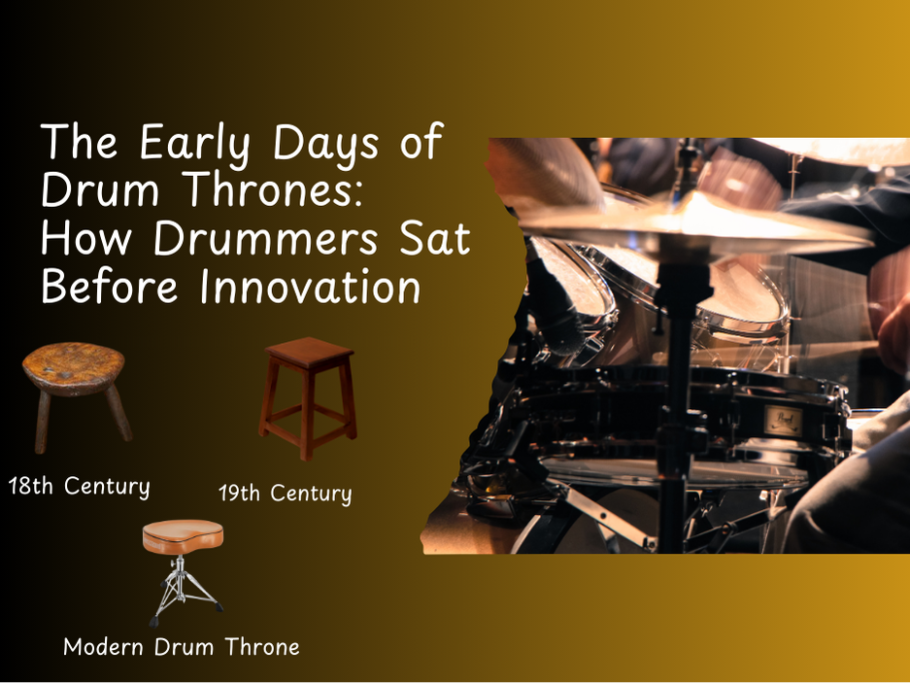
Just think it’s the early 19th century, and a drummer is preparing for a vibrant show. The stage is ready, and the audience is waiting. The drums are shining under dim lights. But at that time, there was a wooden stool where the drummers could sit. Of course, early drum thrones were not as comfortable as today’s drum thrones. After a few songs, their back starts to hurt. The stools felt shaky, and the height was uncomfortable. Still, the show must go on.
You know, before modern drum thrones came along, drummers didn’t have much choice. They just used whatever was around, for example, wooden stools, barrels, and even benches. These weren’t made to be comfortable or the right height. There was just something to sit on and get through the performance. Can you imagine how tough that must have been?
So now you might be wondering how drummers managed back then. What problems did they face? And what features top drum seat providers like Gibraltar, 5 Core, RocnSoc , Orthopedicdrumthrones brought in? Let’s explore the history of early drum seating and how it changed into modern ergonomic drum thrones.
The Era Before Drum Thrones
A long time ago, drum seats were much simpler than today’s. Drummers in the late 1800s and early 1900s usually only had a bass drum and maybe one or two cymbals. They did the job, but they didn’t have the fancy features or comfortable designs that modern drum kits have. It was all about the sound, not how they looked. Can you imagine playing on something so basic and still making great music?
In contrast to modern drum thrones made by well reputed brands like Gibraltar, 5 Core, RocnSoc, drummers in those days had properly designed chairs, but during concerts, they sat on anything they could find because seating was not a top priority. Wooden stools were a common option, occasionally recycled from workshops or kitchens, but they were unstable and uncomfortable.
Some drummers worked from home and sat on ordinary chairs, such as folding or dining chairs. These were effective, but they weren’t designed for drumming, and they frequently led to pain and poor posture.
At that time, makeshift drum thrones were simple to operate and efficient. They were anything but comfortable. There was definitely no height adjustment, no back support, and no padded drum thrones.
But the drummers made it work. They focused on the music, even if it meant sitting uncomfortably for hours. During this phase of improvisation, early drummers’ inventiveness and tenacity were demonstrated. As a result of their hardships, the drum throne was eventually developed and is today a necessary component of each drummer’s equipment.
Challenges Faced by Early Drummers
Early drummers faced many problems due to poor seating. Long sessions caused back and muscle pain because wooden stools had no cushioning. The fixed height forced drummers into awkward postures leading to strain.
Makeshift drum seats were often unstable. During vigorous playing, they toppled over or wobbled. Since the height couldn’t be adjusted, it was hard for drummers to reach the drums properly.
Even though early drummers were creative. But these problems made their playing sessions very tiring. It also affected their performance. However, their struggles led to better drum seats later.
The First Steps Toward Dedicated Drum Seating
As drumming became more difficult and fast-paced, it became clear that drummers needed better seating. Drummers started looking for better options after becoming tired of using shaky and uncomfortable handmade seats.
The first modifications were little but important. Since they were more comfortable, cushioned stools first replaced stiff wooden seats. Although they didn’t offer much support or height adjustability, these stools—the first chairs made specifically for drummers—helped reduce pain during lengthy performances.
Over time, manufacturers such as Gibraltar, 5 Core, RocnSoc , Orthopedicdrumthrones made improvements to their designs. They added height adjustments and stronger bases to enhance the seats’ comfort and use. These early developments paved the way for the modern drum thrones we use today.

This time of transition, which was motivated by need, demonstrated how the responsibilities of drummers were expanding in genres like large bands and jazz. These early attempts largely influenced the development of our modern, sophisticated drum thrones.
Key Innovations That Shaped Modern Drum Thrones
Many important developments led to the development of modern drum thrones. Mechanisms for height adjustment were included to suit drummers of different sizes. Cushioning and backrests offer much-needed support throughout prolonged performances.
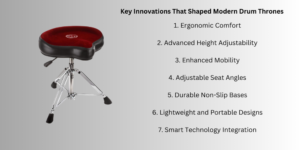
The thrones’ increased stability and portability due to their sturdy construction made them dependable for traveling musicians. Well-known companies like DW, Pearl, and Tama were instrumental in honing these elements and enhancing the design over time for improved functionality. These developments turned the drum throne from a simple seat into a necessary instrument that all drummers now use.
Comparing Early Solutions to Modern Drum Thrones
The old drum seats were nothing like the modern drum stools we have today. Back then, drummers had to make do with wooden stools, crates, or even regular chairs. These seats had no padding or adjustable height option and were not at all stable. Sitting on them for long live shows was very uncomfortable for drummers. It made drummers have bad posture and poor control over their playing.
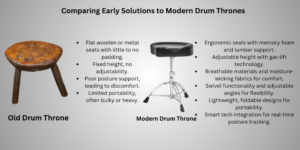
The contemporary drum thrones of today are revolutionary. With its adjustable heights, plush, cushioned seats, and strong bases that remain rock-solid even under the most demanding playing, they were created with drummers in mind. For added comfort, several thrones even have backrests. By providing drummers with the support and freedom they have never had before, these improvements dramatically change the drumming experience and make it easier to play—not only easier but easier to play better and longer.
The Legacy of Drum Thrones in Music History
The history of drum thrones illustrates both the evolution of music and the progress of drumming instruments. From making makeshift chairs to the ergonomic drum thrones of today, drum thrones show how music equipment has continued to advance. Early drummers demonstrated incredible creativity and dexterity in honing their craft despite having little equipment. Their contributions laid the groundwork for modern drumming and showed how need can spur invention. Drummers today enjoy comfort and stability that were previously unimaginable because of a long history of creativity and perseverance.

Conclusion
The journey of drum seats shows how drummers’ needs have been better understood over time. It started with simple stools and crates and led to today’s comfortable and adjustable drum thrones. Modern drum thrones give comfort, support, and stability that early drummers could only imagine. This progress by Gibraltar, 5 Core, RocnSoc , Orthopedicdrumthrones proves how new ideas can make things better. For musicians, the right tools are important. A strong and comfy seat is the first step to performing their best.
All Comments
I appreciate the real-world examples you included — they made the concept click.